
Flexible workstations have gone from being a trend to the new standard. More and more companies and employees are recognizing the value of working models that no longer strictly dictate time and place. Attitudes have changed fundamentally, particularly since the coronavirus pandemic - working from home and hybrid models have become the norm in many industries. This development is not just a passing fad, but a lasting change with far-reaching effects on companies, employees and the design of offices.
Flexible workplaces as a sign of change
There has been a paradigm shift in work culture in recent years. Flexible workstations used to be seen as an exception or a benefit, but today skilled workers expect flexible working models to a large extent. According to recent surveys, over 80 % of employees want to work remotely or hybrid at least part of the time and no longer return to the office full-time. A study from 2023 shows that 40 % of employees would change employer if working from home was banned. At the same time, companies have responded to this change: in 2024 9 out of 10 companies have already introduced hybrid forms of work. Full-time presence in the office is becoming less important - 74 % of CEOs stated that daily presence in the office is no longer a priority. Current trends are clearly moving in the direction of hybrid work, trust-based working hours and location-independent working. Companies around the world are experimenting with new models, be it Work-from-Anywhere, four-day working week or the increased use of Coworking spaces. All of this underlines how much attitudes towards the Workplace flexibility has changed within a short space of time and that flexibility has become a decisive factor in the competition for talent.
Flexible workplaces offer advantages for companies and employees
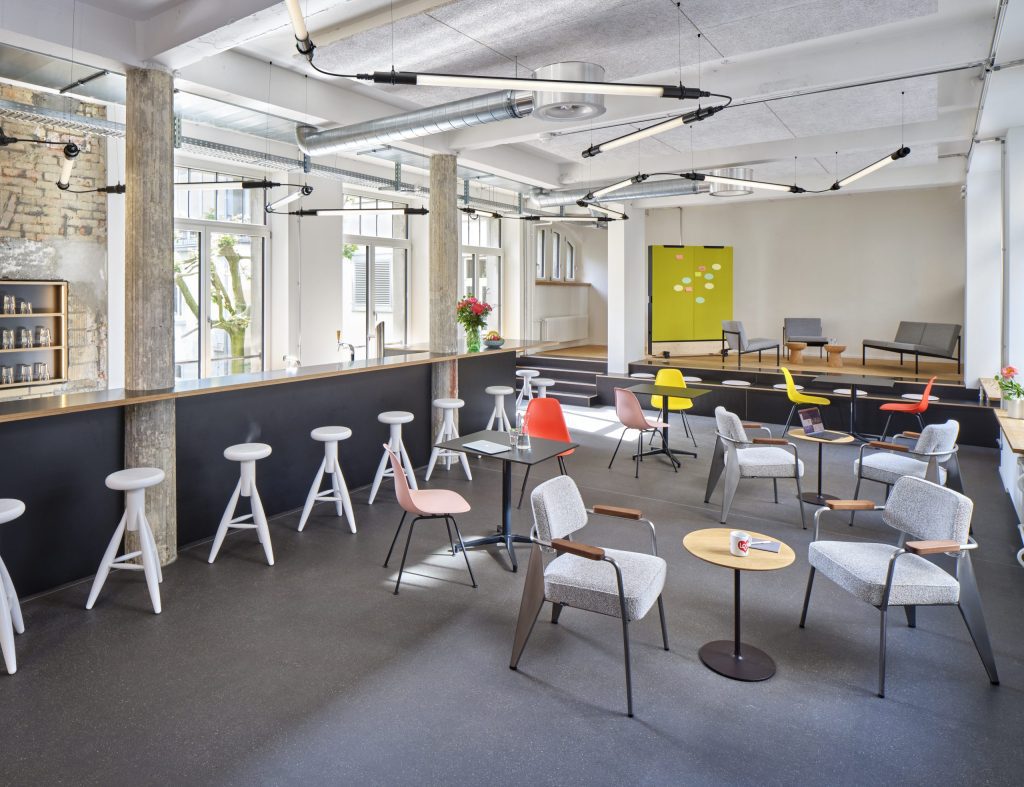
Flexible workstations offer many advantages for both sides. From an employee perspective, the Work-life balance noticeable - less commuting time and more autonomy lead to greater satisfaction and less stress. Many employees appreciate the opportunity to choose their working environment to suit the task at hand: the peace and quiet of home for concentrated work and the office for creative exchange. Studies also show that flexibility increases loyalty: Companies with remote options record significantly lower resignation rates. In an experiment with over 1,600 employees, hybrid working led to higher job satisfaction and reduced fluctuation by around a third.
Companies also benefit directly. On the one hand, flexibility positively on productivity three out of four managers report increases in productivity thanks to hybrid models. On the other hand, the motivation and commitment of the workforce increases, which ultimately benefits the corporate culture. More flexible working models also promote the Employee retention and help, Attracting talentIn an international CEO survey, 75 % identified flexible working as a key lever for attracting top talent. Location-independent recruiting expands the talent pool - 71 % of companies can access a broader range of applicants. In addition Reduce costsfor example, through reduced office space requirements for hybrid work. Last but not least, flexibility contributes to diversity, as working parents or people with longer commutes, for example, have better opportunities to participate in working life. The sum of these advantages makes flexible workplaces a real success factor in the modern corporate environment.
How flexibility affects corporate culture and productivity
Flexible working models influence the Corporate culture profoundly. Initially, some managers were concerned that cohesion and team spirit might suffer if not everyone was on site every day. But in practice, the effects have been overwhelmingly positive: Three quarters of the CEOs surveyed noted an improvement in corporate culture through hybrid working. Employees appreciate the trust placed in them by being able to work from anywhere and at any time, and they return the favor by working harder. Commitment (77 %) and better cross-departmental cooperation. A culture of trust and personal responsibility is replacing strict attendance controls. It is important to establish new forms of communication and team building - e.g. regular virtual meetings, clearly defined joint attendance days or team retreats - in order to strengthen cohesion.
The productivity is positively influenced by flexible workplaces. Numerous studies have dispelled the preconception that presence automatically means productivity. In fact employees work very productively and efficiently in hybrid modelsas long as goals and expectations are clearly defined. Concentrated working from home without the distractions of open-plan offices or commuting stress often leads to higher output quality. At the same time, modern collaboration tools enable productive remote teamwork. A study in the UK even put the productivity gain for a company when introducing hybrid working at several thousand dollars per employee per year. Conversely, it has been shown that enforced office presence can have negative consequences: In Germany, 29 % of employers reported decreases in productivity after requiring staff to work more frequent office days. Flexible workstations This not only promotes motivation, but also protects performance - provided there is a culture of trust and performance is measured by results rather than presence.
Office design in the spirit of collaboration
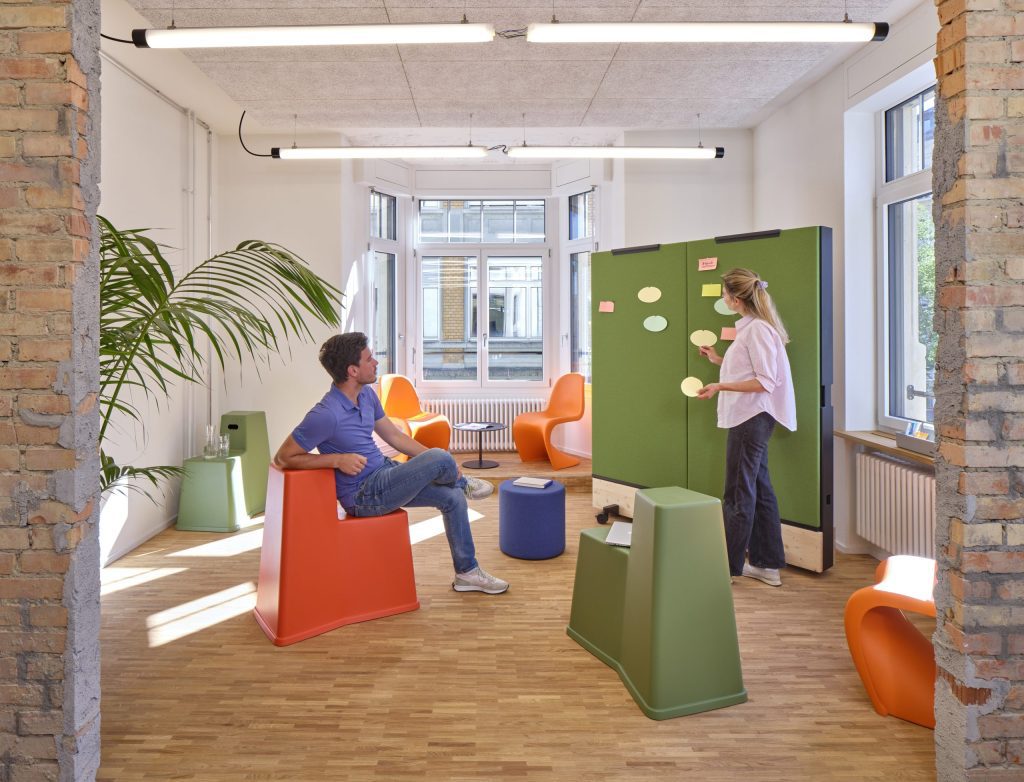
With the growing spread of hybrid work, the role of the office is also changing. Whereas the office used to be primarily a place for the daily fulfillment of duties, today it is increasingly Meeting place and collaboration space. Many employees come to the office to do exactly what is difficult to do remotely: personal exchange, creative brainstorming and teamwork. A study by Great Place to Work describes the office in the post-pandemic era as a "social meeting place"that breathes new life into networking and corporate culture. 70 % of respondents stated that direct contact with colleagues was their main motivation for coming to the office. In fact, the Top reasons for office days according to a recent survey in Germany at the Getting together with the team (42 %)holding scheduled meetings (42 %) and informal knowledge sharing with experienced colleagues (40 %). This shows that The office is used specifically for those activities that require collaboration and creativity, while focused individual work often takes place in the home office.
This change in use is reflected in the Office design again. Modern office concepts rely on flexible room layouts instead of rows of fixed desks. Many companies now only plan with an average utilization of around 50 % of their workstations on site and create correspondingly adaptable environments. Desk Sharing is a common model: instead of having a separate desk for each employee, workstations are shared as required and allocated via an app or booking system. This saves costs and increases capacity utilization - unused desks are a thing of the past. At the same time, more Zones for cooperationsuch as open lounges, project rooms and creative areas, but also Retreats for undisturbed phone calls or thinking phases in the office. This activity-based workspaces allow employees to choose the right environment depending on the task at hand. Overall, the office is becoming a Hub for collaboration, innovation and team culturewhile routine and concentration tasks can be carried out flexibly from elsewhere. Companies and architects are responding to this with agile furnishing concepts that support precisely this multifunctionality.
Study results and best practices
Numerous studies worldwide underpin the Importance of flexible workplaces and provide best practices for successful implementation. For example, the "State of Hybrid Work 2023" report confirms that the overwhelming majority of employees consider flexible working models to be indispensable - 61 % of respondents even demand a legal right to work from home. More than one in two would accept a reduction in salary in return for being allowed to work from home permanently. Such figures illustrate the extent to which flexibility is now perceived as a basic need. At the same time, reports from companies show that certain success factors repeatedly come into play when flexible workplaces be introduced:
- Clear rules and autonomy: The best results are achieved when employees can choose flexibly, when and where They work within the framework of clear guidelines. For example, successful companies define core working hours or attendance days for team meetings, but otherwise give them trust and freedom.
- Communication and digital tools: An open communication culture and state-of-the-art collaboration tools are essential. For example, organizing all meetings in a hybrid-friendly manner (everyr Participantsin - whether on-site or remote - dials in on an equal footing). Tools for video conferencing, chats and project management keep distributed teams up to date and promote the exchange of information.
- Promote collaboration: Establishing managers Rituals for team cohesionsuch as virtual coffee breaks, regular offsite workshops or creative days in the office. In addition, new employees are specifically integrated on office days in order to bring the corporate culture to life. These conscious measures ensure that a sense of togetherness is created despite the distance.
- Optimize the working environment: Successful examples show that employers can invest in the Ergonomic equipment both in the office and in the home office. They ensure that employees have a fully-fledged workplace at home - be it by subsidizing office furniture, technology or service providers who deliver home office packages. At the same time, offices are designed in such a way that employees enjoy using them: with a feel-good atmosphere, diverse work areas and state-of-the-art technology.
These best practices - from Trust-based working hours up to the Digitalization of collaboration - underline that flexible working models only work with a holistic approach. Companies that adopted such concepts at an early stage (often initially as pilot projects) report higher employee retention and innovative strength. It is important to see change as a learning process, to obtain feedback from the workforce and to be prepared to make continuous adjustments. Then flexible workplaces a real win-win situation.
Support from modern office solutions such as Novu Office
In order for flexible working models to be fully effective, the Office equipment and infrastructure move along. This is where modern service providers come into play, helping companies with the transition to flexible workplaces support. One example is Flexible office solutions from Novu OfficeThe Swiss company offers innovative ways to design agile and needs-based working environments. For example, companies can Obtain high-quality office furnishings on a subscription modelinstead of buying fixed furniture. This Furniture-as-a-Service-concept allows office space to be quickly adapted to changing requirements - be it for growth, new project teams or a change to more team zones. Temporary additional areas can also be fitted out in this way without major investment costs.
Ultimately, the combination of flexible corporate culture and flexible office environment out: It increases attractiveness as an employer, improves the performance of teams and helps companies to position themselves for the future - in a working world that is characterized more than ever by flexibility.
